fbpx

As a parent and a camp director, I often speak with parents that have their child on the fast track. Life has become all about building their child's resume, one filled with Accomplishment and Direction. When I mention I run a summer camp they are often unwilling to hear why camp is an important part of what today's children need. At Swift Nature Camp we are about people building not about building resumes. The  better the kids,  the better the people. We believe it is people that will change the world not resumes.
Recently the below article was in the Washington Post,  maybe this is what I need to print and hand out to those parents... Tell us what you think.


I send my kids to sleep-away camp to give them a competitive advantage in life

- Washington Post

“Do you even like your children?” the woman I had just met asked me.

The audacity of the question took my breath away. I had been chatting with her, explaining that my kids go to sleep-away camp for two months every year.

I quickly realized two things at once: She was obnoxious, and she actually didn’t care if I missed my kids during the summer. She was talking about something else.I didn’t have to tell her the reason I “send them away” for most of the summer is because I like them. They adore camp, and it’s actually harder on me than it is on them. I often tell people that the first year they were both gone, it felt like I had lost an arm. I wandered around the house from room to room experiencing phantom limb pain.

Now, instead of being offended, I got excited.

I was going to be able to tell her something that my husband and I rarely get to explain: We do it because we truly think it will help our kids be successful in life. With under-employment and a stagnating labor market looming in their future, an all-around, sleep-away summer camp is one of the best competitive advantages we can give our children.

Huh?

Surely, college admissions officers aren’t going to be impressed with killer friendship bracelets or knowing all the words to the never-ending camp song “Charlie on the M.T.A.” Who cares if they can pitch a tent or build a fire?

Indeed, every summer my kids “miss out” on the specialized, résumé-building summers that their peers have. Their friends go to one-sport summer camps and take summer school to skip ahead in math. Older peers go to SAT/ACT prep classes. One kid worked in his dad’s business as an intern, while another enrolled in a summer program that helped him write all his college essays.

Many (this woman included) would say that I’m doing my children a serious disservice by choosing a quaint and out-of-date ideal instead. There are online Ivy League Coaches” that might say we are making a terrible mistake.

We don’t think this is a mistake at all. It might not be something to put on the college application (unless my child eventually becomes a counselor), but that isn’t the goal for us.

Our goal is bigger.

We are consciously opting out of the things-to-put-on-the-college-application arms race, and instead betting on three huge benefits of summer camp, which we believe will give them a true competitive advantage — in life:

1. Building creativity.

2. Developing broadly as a human being.

3. Not-living-in-my-basement-as-an-adult independence.

MIT’s Erik Brynjolfsson says, in his book “The Second Machine Age,” that we have reached a pivotal moment where technology is replacing skills and people at an accelerated pace. He argues that creativity and innovation are becoming competitive advantages in the race against artificial intelligence, because creativity is something a machine has a hard time replicating.

The problem is that creativity seems so intangible.

Steve Jobs once said, “Creativity is just connecting things.” He believed that people invent when they connect the dots between the experiences they’ve had. To do this, he argued that we need to have more experiences and spend more time thinking about those experiences.

Indeed. According to Adam Grant’s book “Originals: How Non-Conformists Move the World,” researchers at Michigan State University found that to receive the Nobel Prize, you need deep study in your field and those broad experiences Jobs was talking about. They studied the winning scientists from 1901 through 2005 and compared them with typical scientists living at the same time. Grant writes that the Nobel Prize winners were:

* Two times more likely to  play an instrument, compose or conduct.

* Seven times more likely to draw, paint or sculpt.

* Seven-and-a-half times more likely to do woodwork or be a mechanic, electrician or glassblower.

* Twelve times more likely to write poetry, plays, novels or short stories.

* And 22 times more likely to be an amateur actor, dancer or magician.

You read that right. Magician.

It’s not just that this kind of original thinker actively seeks out creative pursuits. These original experiences provide a new way of looking at the world, which helped the prize-winners think differently in their day jobs.

The beauty of summer camp is that not only do kids get to do all sorts of crazy new things, they also get to do it in nature, which lends its own creative boost.

Most importantly, my kids have such intensely packed schedules full of sports, music, art classes, community service and technological stimulation throughout the school year that it makes finding these all-important quiet mental spaces more difficult.

Summers provide a much-needed opportunity for my children to unplug, achieve focus and develop those creative thought processes and connections.

Okay, okay. Creativity might be a compelling tool to beat out that neighbor girl applying to the same college, but what about this “developing broadly as a human being” stuff?

I didn’t come up with that phrase. Harvard did.

William Fitzsimmons, dean of admissions at Harvard, has penned a compelling letter to parents. It practically begs and pleads with them to reevaluate the summer extracurriculars race and to “bring summer back,” with an “old-fashioned summer job” perhaps, or simply time to “gather strength for the school year ahead.”

Fitzsimmons writes, “What can be negative is when people lose sight of the fact that it’s important to develop broadly as a human being, as opposed to being an achievement machine. In the end, people will do much better reflecting, perhaps through some down time, in the summer.”

In terms of “developing broadly as a human being,” summer camp can provide an impressive list of life skills.

Studies over the past decade have shown outdoor programs stimulate the development of interpersonal competencies, enhance leadership skills and have positive effects on adolescents’ sense of empowerment, self-control, independence, self-understanding, assertiveness, decision-making skills, self-esteem, leadership, academics, personality and interpersonal relations.

Now for the cherry on top: Independence.

Michael Thompson, the author of “Homesick and Happy,” has written, “… there are things that, as a parent, you cannot do for your children, as much as you might wish to. You cannot make them happy (if you try too hard they become whiners); you cannot give them self-esteem and confidence (those come from their own accomplishments); you cannot pick friends for them and micro-manage their social lives, and finally you cannot give them independence. The only way children can grow into independence is to have their parents open the door and let them walk out. That’s what makes camp such a life-changing experience for children.”

So, yes, Ms. Tiger Mom, I am letting my children walk out the door and make useless lanyards for two months.

They might not have anything “constructive” to place on their college application, but they will reflect, unwind, think and laugh. They will explore, perform skits they wrote themselves and make those endless friendship bracelets to tie onto the wrists of lifelong friends.

The result will be that when they come back through our door, we’re pretty sure that, in addition to having gobs of creativity and independence, they’ll be more comfortable with who they are as people.

And just maybe they’ll even bring back a few magic tricks.


Laura Clydesdale lives in Berkeley, Calif., with her husband and children.

Come to the Swift Nature Camp Open House in Chicagoland May 30h.   

Our Open House is a wonderful time to learn more about camp by meeting the Directors (Lonnie & Jeff) and Staff. If you are already enrolled this is a time to meet new friends and play games with the other campers and counsleors. You can even bring a freind. We promise to bring some fun criiters from our Nature Center for you to meet. We hope you can make it to this fun program. Please dress for the weather. If you have any questions call us at 630-654-8036.


OPEN HOUSE AT THE WILLOWBROOK WILDLIFE CENTER

TIME: 2pm-4pm

WHERE: Willowbrook Wildlife Center ( across from the College of Dupage)


Wishing you all the best, See yiu soon.


Happy Trails

Lonnie & Jeff


DIRECTIONS to Willowbrook Wildlife center

WILLOWBROOK WILDLIFE CENTER IS LOCATED on the east side of Park Boulevard across from College of DuPage, one mile south of Roosevelt (Rt. 38) and one mile north of Butterfield Road (Rt. 56).

(630) 942-6200

3aWe want the best for our children. Yet, for myself, as a parent of a 14 year old son,  I often look back and think of a simpler, less connected time. A time when the Andy Griffith show roll modeled how life should be. I want my son to know what these times were like and connect with them. But, as I nostagically look back to these simpler days am I limiting the skills he will need for the 21st Century? To make this even more complicated our son is Homeschooled. So where can I turn to give my child an advantage in years and decades to come?
 Most parents tend to rely on our own pareting skills and schools to raise our children. Summer Camp is as often missed oppertunity. Children tend to learn when they are away from us and away from school. This is when they are actually most able and willing to learn. This is where the summer camp experience comes into play and the American Camp Association realizes the impact it has on todays youth is more than playing outside.

The American Camp Association is jumping with both feet into measuring camp’s impact on kids.

In the process, the national organization representing 2800 summer and after-school camps has found a new marketing tool: 21st century skills.

“There’s a common perception that the American Camp Association is about canoes in a lake and tents,” said Tom Holland, chief executive of the camp association.

“But where we have transitioned in the last ten years is being about youth development, specifically the out-of-school-time space.” He spoke at the group’s annual conference in February in Atlanta, where various workshop leaders spoke excitedly about the new direction of camp.

Summer camps still have traditional activities such as archery and swimming, Holland said. They may be located in beautiful wilderness areas,”

“It’s not about that location. It’s about the growth and development of a child,” he said, “the outcomes that they have through our programs.”

For years, camp has fostered leadership, grit, tenacity and resilience in kids in the course of fun activities, he said, referring to qualities that researchers are pointing to as valuable.


“That’s the core of who we’ve always been,” he said.

But camps need to demonstrate their impact.

“Let’s track those outcomes,” he said.

About 20 percent of camp association member track outcomes. “It’s a number we hope to grow,” Holland said.


The association is urging its members, which include nonprofit and for-profit camp operators, to begin using the new Youth Outcomes Battery. It’s a survey kids take to measure whether camp has increased their independence, friendship, confidence, interest in exploration, perceived competence, problem-solving ability, responsibility, spiritual well-being, family citizenship, teamwork affinity with nature and sense of connectedness.

• Camps pick the qualities they wish to measure, some of which line up with the “21st century skills,” a buzzword for abilities thought to be needed in a changing economy, particularly critical thinking, communication, creativity and collaboration.

• Camps may still have traditional activities such as swimming and archery and they may be located in beautiful wilderness areas, but the new focus is youth development, according to the American Camp Association.
Efforts to push these skills in school and out of school are hailed by organizations such as the Partnership for 21st Century Learning, a business- and educator led group.

Critics, however, say the skills are presented in such a generalized way as to be meaningless and they are not new.

What’s to prove?

But in a world of data and evidence, the camp association wants to show its impact. The survey data is helpful for camp leaders to see what’s working well in their programs and what could be improved, Holland said.

The camp association is positioning itself as a partner in education in order to convince today’s parents of camp’s value.

“More and more parents are asking the question: ‘What is my child going to get out of this?’” Holland said.

“This is giving our camps the tools,” he said.

It’s about intentionality, he said. “Are you intentional about what outcomes the children will walk away with?” And then are you translating and sharing that information with parents?”


Scott Brody is a former national vice president of the American Camp Association and owner of Camps Kenwood and Evergreen in Wilmot, N.H.

He recently expanded his camp business into China, where affluent parents are looking to give their children an edge in a competitive economy.

He envisions a partnership between camps and schools to strengthen 21st century skills in kids.

Every activity in camp could be matched with one of the learning outcomes, he said.

Last year, Brody was quoted in an article in the Yale Globalist about the expansion of American-style camps in China.

“When you look at the entrepreneurial and innovation skill set, a lot of what you need are the qualities that people get to practice at camp—creativity, communication, collaboration, and building your own sense of resilience,” Brody said. “All of these themes are interwoven with the American dream. And the opportunity to practice these skills is the critical novelty of the camp environment.”

At the camp association conference Brody spoke about the value of the Youth Outcome Battery.

“We’re talking about outcomes and measures that are valued in the business world and in schools,” he said.

“It’s a huge marketing advantage,” Brody said. Parents are looking for experiences that give the child an advantage, that add value.”

“We are in the college and career readiness business,” he said. “We are in the education business.”


reprinted from Youth Today

By Stell Simonton | February 23, 2016


NATURE NUTS

Chances are that if you came to SNC or are thinking of coming to SNC in 2016, you are a Nature Nut!


We will be having a N. N. Meeting…Open to All


It will be filled with Nature, Fun and Learning. Hope you can join us!
When: February 28th


Where: Fullersburg Woods
 Oak Brook, Il


Time: 1-3pm.
Megan from our Nature Center will be coming from Wisconsin just to run the program.

Please let her know you are coming by sending her an email at  This email address is being protected from spambots. You need JavaScript enabled to view it.

Come and make her feel loved by you


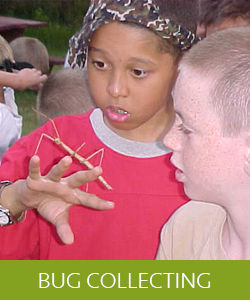
abug As we all know connections are so important with our children. As a parent I have to say their are times that I think back to those younger years and think about how easy it was. You pick up a Dr. Suess book or play Hands Down and life is good. However, as kids get older and enter teendom they want to be independant and break away from us Parental Units, this is natural. But here are a few things we can do to bring back those connections. that we know we need to keep.


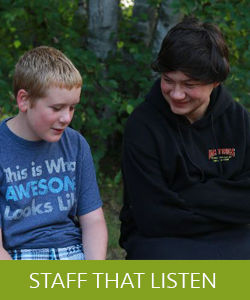
Talk (and Listen) to Them


The most basic way to connect with your children is to talk to them. Tell them about your day and ask about theirs. Try to remember everything they tell you. Children have a memory that just won’t quit sometimes, and they expect you to have the same. Ask them questions. It’s important for people to feel like the person they are talking to cares about what they have to say. Asking questions about what they told you it proves you were listening and want to know more. Don’t expect your kids to tell you everything about themselves in one sitting. It takes time to build the kind of connection you are looking for, especially with teens and older children who are still feeling rebellious.


Take an Interest in their Interests


Sometimes just talking doesn’t work for all kids. They may have built their guard up too high to realize that you just want to help them. In this case it may be a good idea to consider doing something else together. If your child likes to play video games, ask for the second controller and play too. Maybe help them with an art project they’re working on. You can try to get involved in anything they like to do. They may still try to shut you out sometimes, but eventually you will find something to do together.
Just try not to seem judgmental about their hobbies. If they aren’t hurting anyone, then you shouldn’t be concerned. If they start to feel that you don’t appreciate what they love, they will start to push you further away.


Invite Them Into Your World


If you can’t find common ground in the things they like to do, maybe you should look for some in the things you enjoy. It’s not uncommon for children to forget that parents or guardians are people too. If you’re willing to show them who you are, then perhaps they will open up and do the same. You can invite them to one of your favorite shows or sporting events. Let them meet some of your coworkers. If your children are old enough, then you can take them with you to the gym or your yoga class. Anything can work as long as you can get them interested.


Find a New Hobby


You may find that you simply have no current interests in common with your child. That’s OK. In this case, you can talk to them about finding something new for the two of you to do together. Try to find something that neither of you have done and you both find at least mildly interesting, and start together. Neither of you will be the leader in this activity because no one has more experience. Even if you find out that you both hated the activity, you at least have a mutual experience to work with.


Guilt is Not a Weapon


Never send your children on a guilt trip. It’s a cheap trick that will only cause them to resent you in the long run. Make it clear that you want to spend time with them and get to know them, but don’t try to make them feel bad if it doesn’t work out right away. It may take a few tries but you’ll wear them down eventually and they’ll give you a chance.
There’s a Time For Friendship and a Time For Parenting
It’s great to be your child’s friend. The feeling is unmatched. But it can be easy to take it too far. You should never forget that you are a guardian first. You are there primarily to see to it that the child in your care is safe and grows up well. A balance must be found between parenting and friendship. You need your child to trust you enough to tell you about the things going on around you but also to feel safe enough to seek true guidance from you.


Don’t Get Discouraged


Kids can be difficult. It may seem that no matter what you try, you’re still feeling just as distant from them as when you started. Don’t give up. They know what you’re trying to do, and on some level, they appreciate it, even if they don’t make it obvious right now. If nothing else, they will at least think of you when they face any struggles and remember that at least one person cares for them. Sometimes that’s enough.

Child-Development-Info-Logo1.jpg

Reprinted from Child Development Insitute

Page 32 of 95

Winter

25 Baybrook Ln.

Oak Brook, IL 60523

Phone: 630-654-8036

swiftcamp@aol.com

Camp

W7471 Ernie Swift Rd.

Minong, WI 54859

Phone: 715-466-5666

swiftcamp@aol.com